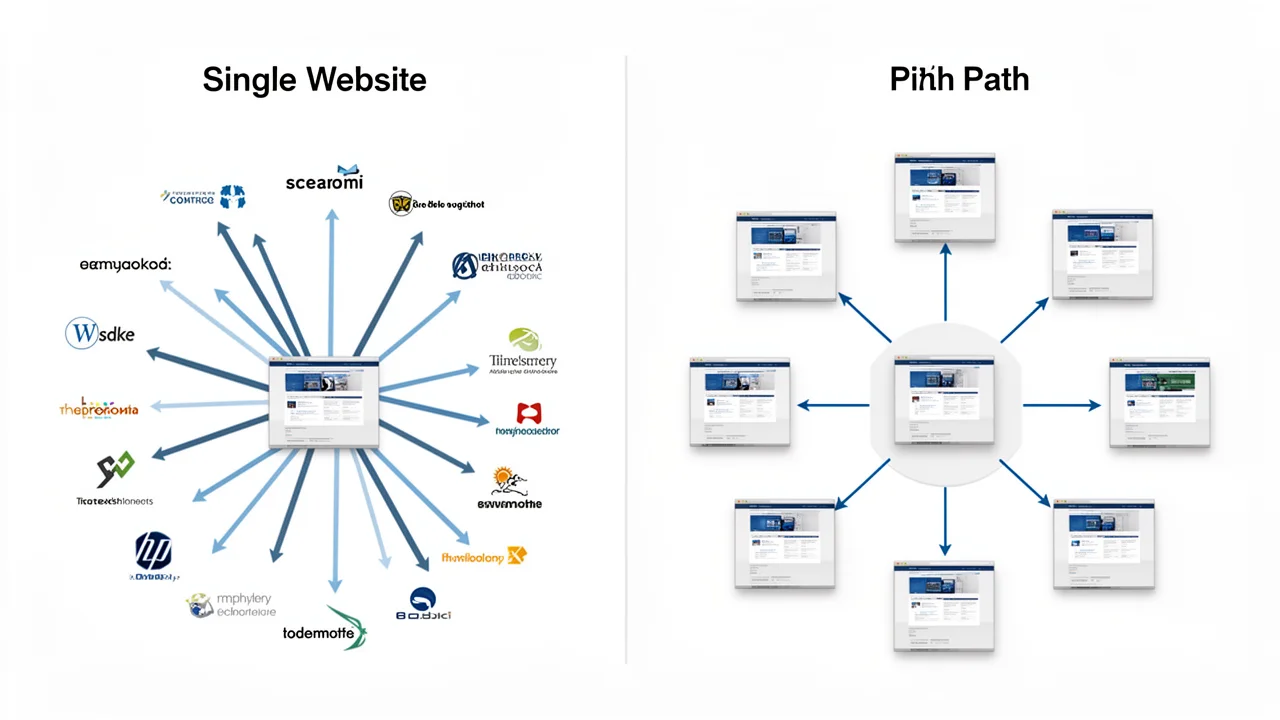
The Modern Link Building Landscape
Link building remains a cornerstone of SEO, but the methods have evolved. Today’s SEO professionals must choose strategies that balance effectiveness, risk, resource investment, and alignment with Google’s guidelines. The debate often centers on controlled environments like Private Blog Networks versus organic methods like guest posting and digital PR. Understanding the nuances of each is crucial for building a sustainable backlink profile. This is especially true when the goal extends beyond links to encompass long-term brand awareness and authority, where the consistency of a content network can be particularly powerful.
Private Blog Networks: Control at Scale
PBNs are a network of websites owned by the SEO to build links to a money site.
Pros: - Complete Control: You dictate the anchor text, link placement, and surrounding content. - Predictability & Scalability: You can generate a high volume of links on a schedule. - Topical Relevance: You can perfectly align the linking site’s content with your target’s niche. - Cost-Efficiency Long-Term: After the initial setup, maintaining and adding links is relatively inexpensive.
Cons: - High Initial Investment: Requires significant time/capital for domains, hosting, and content creation. - Technical & Management Overhead: Requires ongoing maintenance to avoid footprints. - Inherent Risk: If discovered and devalued by Google, the entire network’s link equity can be lost. - Lacks Third-Party Validation: Links come from properties you own, not independent sites.
Tools like Turbo Subdomains mitigate the technical overhead, making PBNs more accessible.
Guest Posting & Outreach: Building Real Relationships
This involves pitching and publishing content on other websites in your industry to earn a backlink.
Pros: - High Authority & Trust: Links from reputable, independent sites are highly valued. - Audience Exposure: Reaches new readers on established platforms. - Relationship Building: Creates connections with influencers and webmasters. - Lower Perceived Risk: Aligns closely with Google’s guidelines for natural link acquisition.
Cons: - Time-Intensive: Finding opportunities, pitching, and writing can take hours per link. - Unpredictable & Less Scalable: Success rates vary; scaling to hundreds of links is challenging. - Limited Control: The publisher often controls anchor text and may nofollow the link. - Cost: High-quality guest post opportunities on premium sites can be expensive.
Other Common Methods: Directories, HARO, & Unmentioned Links
Business Directory Listings: - Best For: Local SEO, citation building. Drawback: Most links are nofollow or low-authority.
HARO (Help a Reporter Out): - Best For: Earning high-authority .edu and .gov links through expert commentary. Drawback: Very competitive; requires quick, excellent responses.
Unmentioned/Brand Mentions: - Best For: Building natural link profiles. Involves finding brand mentions without links and requesting one. Drawback: Requires ongoing monitoring and outreach.
The Strategic Takeaway: No single method is best. A robust strategy often layers these techniques. PBNs can provide a scalable, controlled foundation of contextual links, while guest posting and HARO build the high-trust, editorial backlinks that diversify the profile and enhance brand authority. Effective SEO strategy involves knowing when and how to deploy each tool.